Why bathroom silicone turns black
Last updated 13 June 2026 · 5 min read
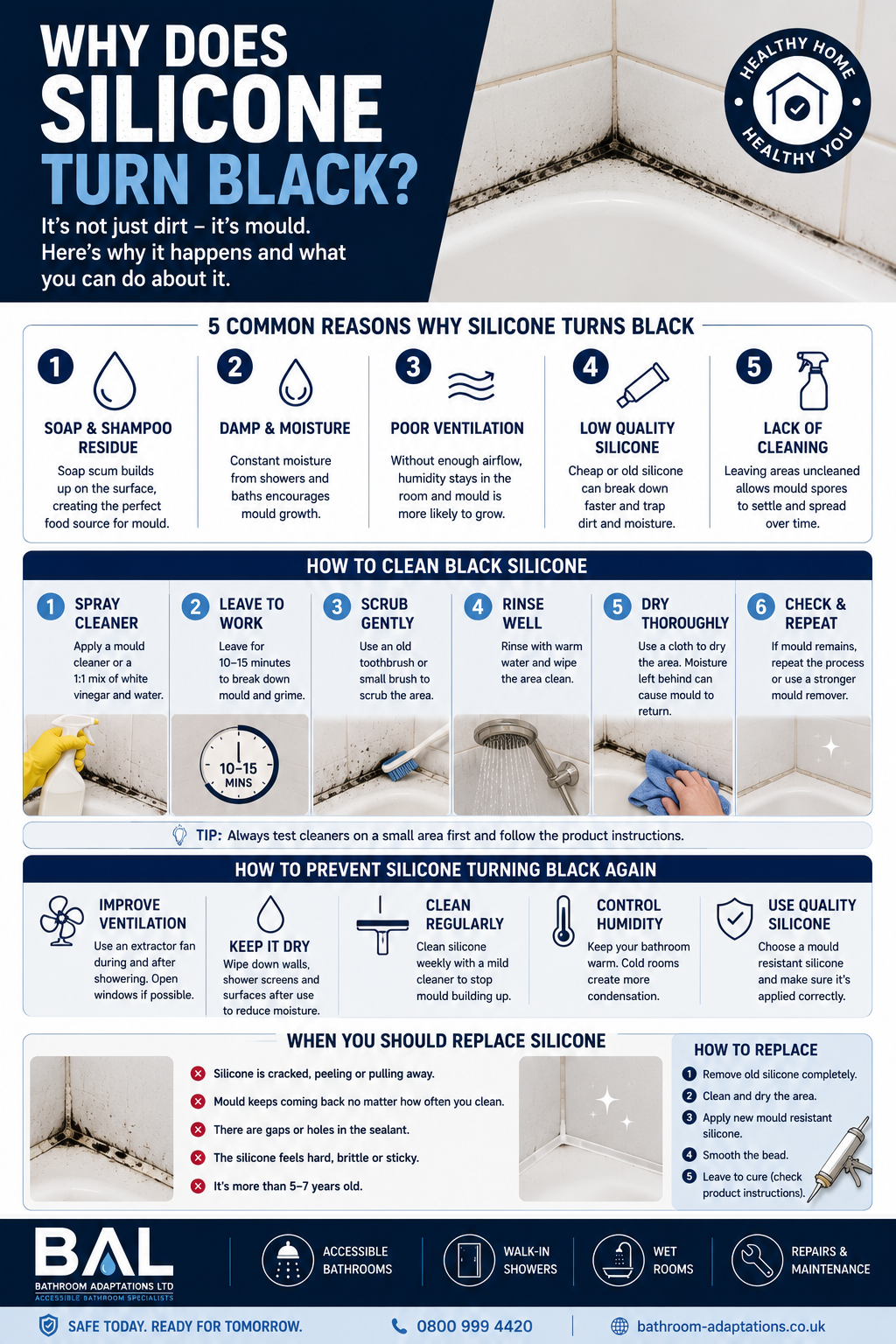
Blackening silicone is usually mould growth feeding on trapped moisture and residue rather than a simple colour change in the sealant itself. Bathrooms with poor ventilation or seals that stay damp for long periods are the most common problem spots.
The good news is that light blackening can often be cleaned. The less good news is that old, brittle or deeply stained silicone usually needs replaced rather than endlessly scrubbed.
Step-by-step summary
Step 1
Spray cleaner
Apply mould cleaner or a suitable diluted vinegar solution to the blackened silicone.
Step 2
Leave it to work
Allow time for the cleaner to break down surface mould and grime.
Step 3
Scrub gently
Use a soft toothbrush or cloth rather than aggressive scrubbing that tears the seal.
Step 4
Rinse well
Remove cleaner residue with clean water.
Step 5
Dry thoroughly
Dry the joint fully so moisture is not left behind.
Step 6
Check and repeat if needed
If staining remains deep within damaged silicone, replacement is usually the better fix.
The most common causes
The main drivers are soap and shampoo build-up, constant dampness, weak ventilation, cheap or ageing silicone, and inconsistent cleaning. In most cases, more than one of these is happening at the same time.
- Moisture left after showers or baths
- Poor extractor fan performance or no window ventilation
- Residue from soaps, shampoos and body oils
- Low-quality or very old sealant
- Bathroom corners that are hard to wipe dry regularly
How to stop it happening again
Once the visible staining is removed, prevention is mostly about helping the room dry faster and keeping residue off the seal.
- Run the extractor fan during and after showering.
- Wipe down the shower screen, tray edges and corners after use.
- Clean the seal regularly with a mild bathroom cleaner.
- Keep the room warm enough to reduce condensation on cold surfaces.
- Use a high-quality mould-resistant bathroom silicone when resealing.
Signs replacement is the right call
Cleaning only helps while the seal is still structurally sound. If the silicone is cracked, peeling, brittle or black right through the bead, it is no longer doing its waterproofing job properly.
- The silicone pulls away from the wall or tray.
- There are gaps or holes in the joint.
- The bead feels hard, crumbly or sticky.
- Black staining returns almost immediately after cleaning.
Frequently asked questions
Can black silicone be made white again?
Sometimes, if the mould is only on the surface and the silicone is still in good condition. If the staining has penetrated the seal, replacement gives a better result.
Why does mould keep coming back on the same corner?
That usually points to a repeat moisture problem such as poor airflow, a cold surface, soap build-up or water sitting in the same joint after every shower.
Should I use normal sealant or bathroom silicone?
Always use a mould-resistant bathroom silicone in wet areas. General-purpose sealants do not perform as well around baths and showers.
Related guides
Need help with the job itself?
We install accessible bathrooms, walk-in showers and wet rooms across Central Scotland.