How to clean black mould in a bathroom
Last updated 13 June 2026 · 7 min read
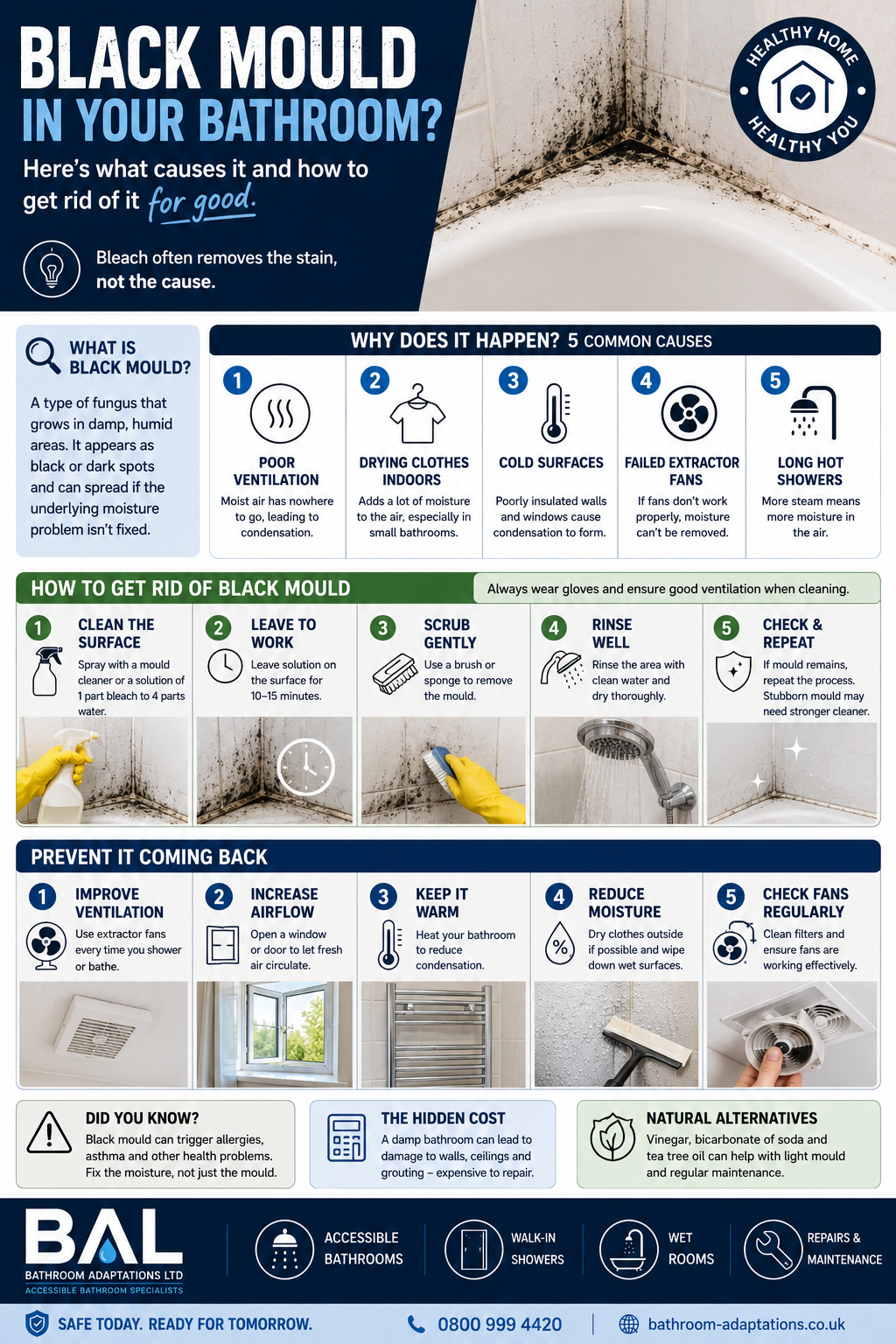
Black mould in a bathroom is usually a moisture problem first and a cleaning problem second. If you only wipe away the staining without tackling ventilation, condensation or standing water, it nearly always comes back.
This guide covers the practical cleaning steps, the causes most homeowners miss, and the signs that a larger damp issue may need professional attention.
Step-by-step summary
Step 1
Prepare the area
Open a window or switch on the extractor fan, and wear gloves before you start cleaning.
Step 2
Apply the cleaner
Spray a mould cleaner or suitable vinegar-based solution directly onto the affected joint, grout or corner.
Step 3
Leave it to work
Give the cleaner time to break down the growth instead of scrubbing immediately.
Step 4
Scrub gently
Use a soft brush or cloth and focus on the mould rather than damaging the surrounding finish.
Step 5
Wipe and rinse
Remove cleaner residue with clean water and a microfibre cloth.
Step 6
Dry the area
Drying is essential because mould returns fastest on surfaces left damp after cleaning.
Step 7
Prevent it returning
Improve ventilation, wipe down wet surfaces and deal with leaks or condensation hotspots.
Why black mould grows in bathrooms
The usual causes are trapped moisture, weak ventilation, soap residue, poor heating and condensation on cold surfaces. Long hot showers can push humidity up quickly, especially in small bathrooms with no window or an underperforming extractor fan.
Bathrooms that dry laundry, have failed silicone seals, or hold water around bath edges and shower screens are even more prone to repeat mould growth.
What not to do
Some common shortcuts make the problem worse or simply hide it for a short time.
- Do not ignore the moisture source behind the staining.
- Do not use abrasive scrubbing on soft seals or delicate finishes.
- Do not paint or seal over active mould growth.
- Do not mix cleaning chemicals unless the product instructions explicitly allow it.
When to call in a professional
If mould keeps returning in the same place, spreads over large areas, sits inside wall or ceiling surfaces, or appears alongside peeling paint and persistent damp smells, there may be a deeper issue with ventilation, leaks or insulation.
In those cases, cleaning the visible area helps temporarily but will not solve the cause on its own.
Frequently asked questions
Does bleach kill black mould properly?
Bleach often removes the visible staining on hard surfaces, but it does not always solve the moisture issue behind it. That is why mould often comes back quickly.
Is black mould in the bathroom dangerous?
It can irritate airways and make conditions like asthma worse, especially in poorly ventilated homes. The safest approach is to remove it and deal with the moisture source promptly.
How do I stop mould coming back after cleaning?
Use the extractor fan properly, keep surfaces drier after showers, repair leaks, replace failed silicone, and improve airflow so the room dries faster.
Related guides
Need help with the job itself?
We install accessible bathrooms, walk-in showers and wet rooms across Central Scotland.