Bathroom adaptations explained
Last updated 13 June 2026 · 7 min read
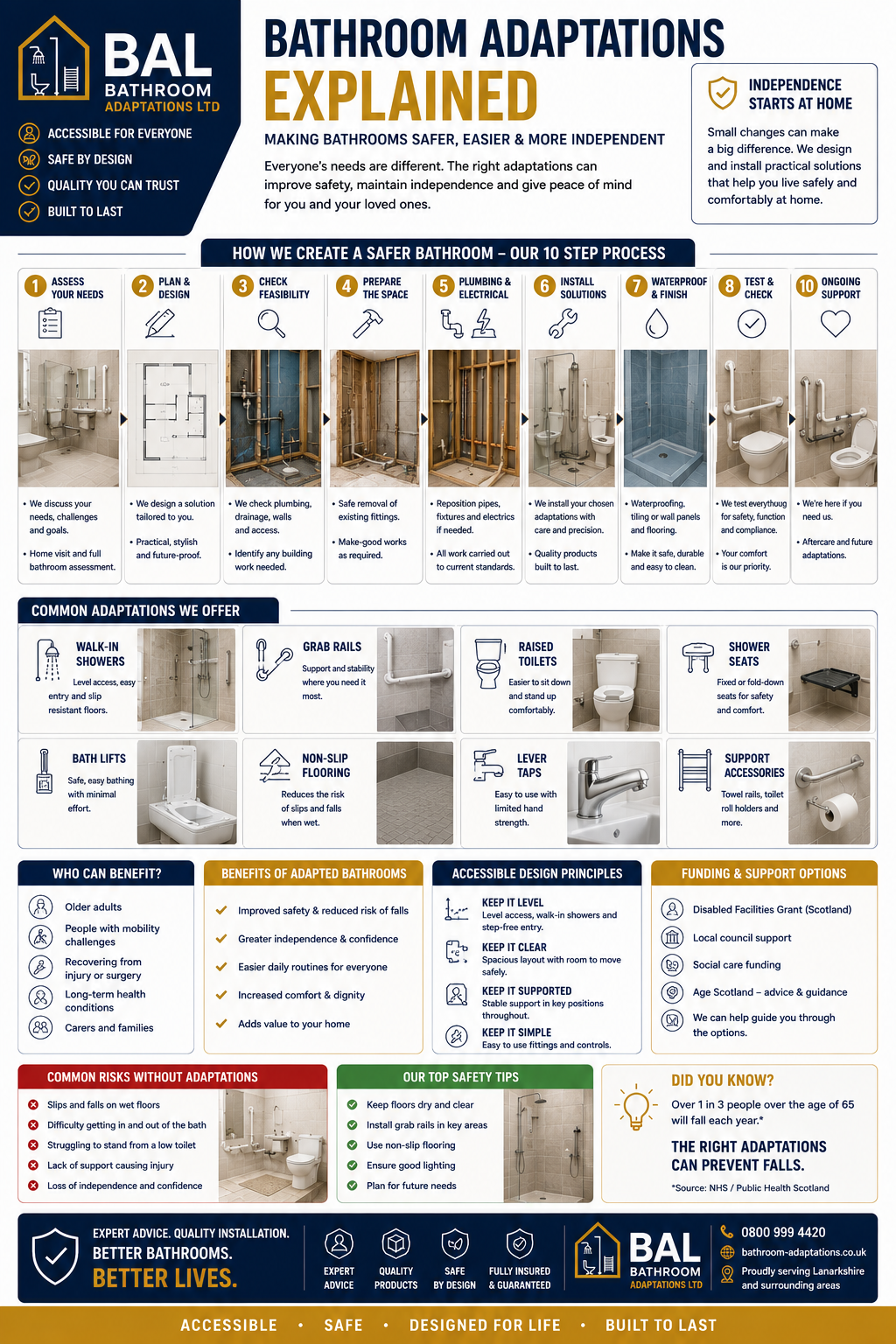
Bathroom adaptations are practical changes that make bathing, showering and toilet use safer and easier. They are often used by older adults, people with mobility difficulties, people recovering from injury and families planning ahead for long-term independence at home.
The right adaptation is not just about adding equipment. It is about matching layout, access, support and ease of use to the person who will rely on the room every day.
Step-by-step summary
Step 1
Assess needs
Discuss safety concerns, mobility, daily routines and who will use the room.
Step 2
Plan the design
Lay out a practical solution that suits the user, the property and the budget.
Step 3
Check feasibility
Review drainage, plumbing, walls and any building work needed.
Step 4
Prepare the space
Remove the old bathroom and make good the room for the new installation.
Step 5
Complete plumbing and electrics
Move services where required and bring everything up to standard.
Step 6
Install the chosen solutions
Fit the new shower, toilet, rails, seating and finishes with care.
Step 7
Waterproof and finish
Protect wet areas and complete the final surfaces and sealing.
Step 8
Test and support
Check safety, comfort and function, then provide aftercare advice.
Common adaptations people ask for
The most popular adaptations are the ones that make the biggest difference to daily confidence. Low-entry showers remove climbing over a bath edge. Grab rails add support where it matters. Slip-resistant floors reduce the risk of falls.
- Walk-in or level-access showers
- Grab rails and support rails
- Fold-down or fixed shower seats
- Raised toilets and support frames
- Non-slip flooring
- Lever taps and easier controls
Design principles that matter most
Good accessible design is usually simple rather than complicated. Keeping access level, leaving room to move safely and placing support in the right spots often matters more than adding lots of products.
It also helps to think ahead. A bathroom that works today should still be practical if mobility changes in future.
- Keep thresholds low or level wherever possible.
- Leave enough clear space to move and turn safely.
- Put support exactly where the user needs it, not where it just looks tidy.
- Choose controls and fittings that are easy to grip and use.
Who can benefit from adaptations
Accessible bathrooms are not only for one type of person. They can support older homeowners, disabled people, carers, families adapting a room for a relative and anyone wanting safer day-to-day use.
In many homes, thoughtful adaptations also help people stay independent for longer and avoid disruptive moves later on.
Frequently asked questions
What is the most useful bathroom adaptation?
It depends on the person, but low-entry showers, grab rails and non-slip flooring are often the changes that immediately improve safety and confidence.
Can adaptations still look modern?
Yes. The best accessible bathrooms feel practical, calm and well-designed rather than clinical, especially when the layout is planned properly from the start.
Are bathroom adaptations only for older adults?
No. They can help anyone with reduced mobility, injury recovery, long-term conditions, caring responsibilities or future-proofing needs.
Related guides
Need help with the job itself?
We install accessible bathrooms, walk-in showers and wet rooms across Central Scotland.