How a walk-in shower is installed: step by step
Last updated 13 June 2026 · 6 min read
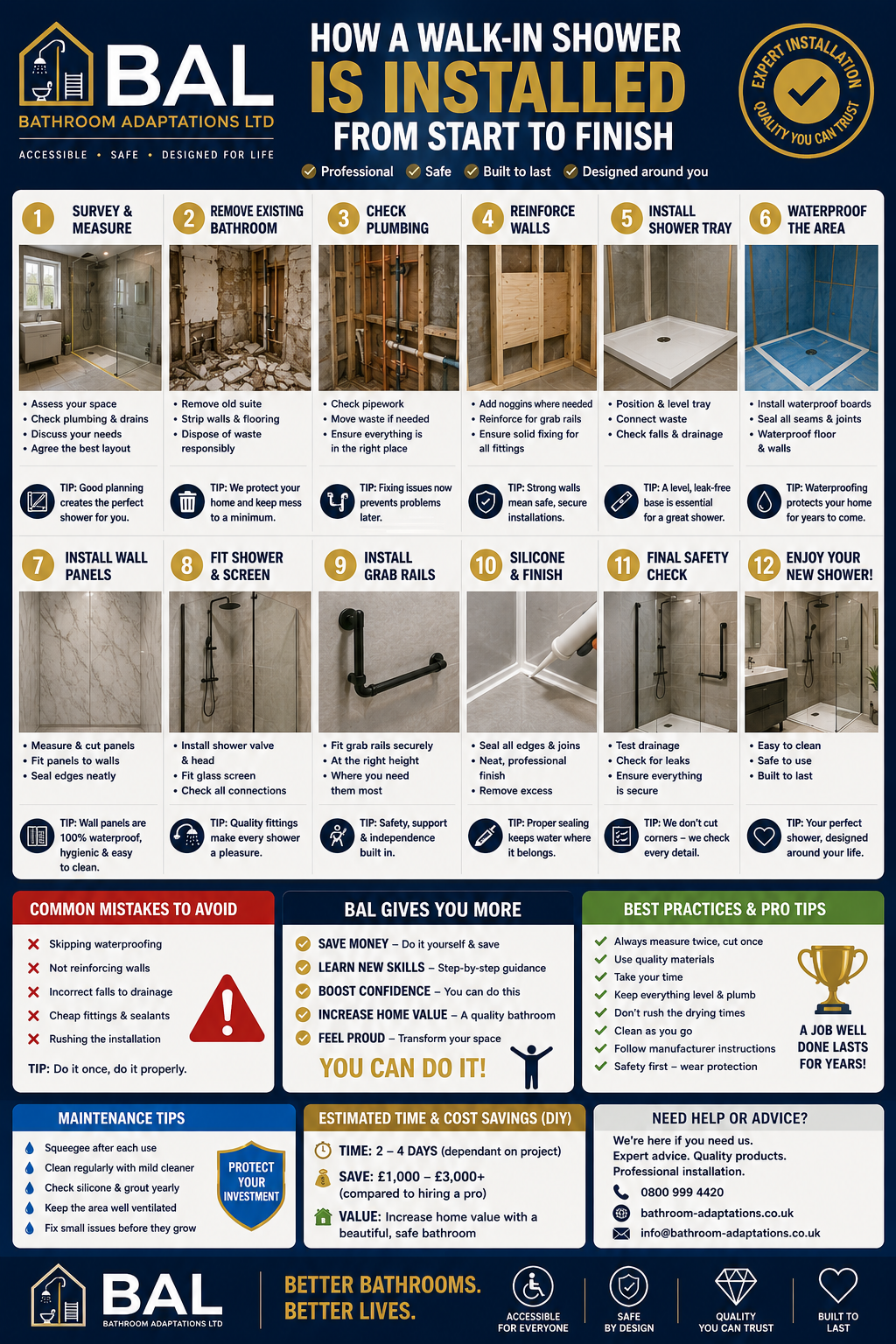
This installation guide shows what should happen on a properly managed walk-in shower job. It is useful for homeowners comparing quotes, families applying for adaptation funding, and anyone wanting to understand where quality and safety come from.
The key point is that the finished shower is only as good as the preparation underneath it. Reinforced walls, correct falls to drainage and full waterproofing matter far more than the brand of screen or tray.
Step-by-step summary
Step 1
Survey and measure
Confirm the room layout, drainage positions, user needs and access requirements before ordering any materials.
Step 2
Remove the existing bathroom
Take out the old bath or shower, strip damaged wall finishes and dispose of waste safely.
Step 3
Check plumbing
Inspect pipework, move waste lines if needed and make sure the new tray position works with the drainage run.
Step 4
Reinforce the walls
Install noggins or solid backing so grab rails, seats and screens fix into something stronger than plasterboard.
Step 5
Install the shower tray
Level the tray, connect the waste and confirm the falls to drainage before any wall finishes are fitted.
Step 6
Waterproof the area
Seal joints, boards, floors and wall transitions so water stays inside the shower zone.
Step 7
Fit wall panels
Measure, cut and bond the chosen wall finish neatly so the surface is hygienic and easy to clean.
Step 8
Install fittings and finish
Fit the shower valve, screen, grab rails and silicone seals, then complete a final safety and leak inspection.
What good installers do before day one
A good installation starts before any tools come out. The survey should confirm who will use the shower, whether grab rails or a fold-down seat are needed, and whether the layout must work for a carer as well as the main user.
This is also the point where drainage, pipe positions and wall construction are checked. If an installer skips that survey and quotes from photos alone, there is a higher chance of extras appearing later.
Why wall reinforcement and waterproofing matter so much
Grab rails, shower seats and screens all place load on the wall. Without solid timber noggins or backing boards, fixings can loosen over time. That is not just untidy — it becomes a safety issue.
Waterproofing is the other non-negotiable. Shower boards, tiles and silicone are the visible finish, but the real protection comes from what is behind them: sealed joints, waterproof boards and properly prepared surfaces.
- Grab rails should fix into solid backing, not hollow plasterboard.
- The tray must be level even when the room itself is not.
- Waste connections and falls should be tested before the final finish goes on.
- Sealants are the finishing touch, not the main waterproofing system.
Questions worth asking your installer
If you are comparing quotes, ask each installer the same practical questions. Their answers usually tell you more than the brochure does.
- Will the old bath, tiles and rubble be removed and disposed of?
- How will grab rails be reinforced behind the walls?
- What waterproofing system is used behind the finish?
- How long is the installation expected to take?
- What final checks are done before handover?
Frequently asked questions
How long does a walk-in shower install take?
Most like-for-like replacements take three to five working days. Larger layout changes, floor repairs or full wet-room style waterproofing can take longer.
Do you always need to reinforce the walls?
If the shower will have grab rails, a seat or heavy glass fittings, yes. Reinforcement is one of the details that makes the installation safer and longer lasting.
What causes leaks on badly fitted shower installs?
The usual causes are poor tray levelling, weak drainage falls, inadequate waterproofing behind the finish, or relying on silicone alone instead of proper preparation.
Need help with the job itself?
We install accessible bathrooms, walk-in showers and wet rooms across Central Scotland.